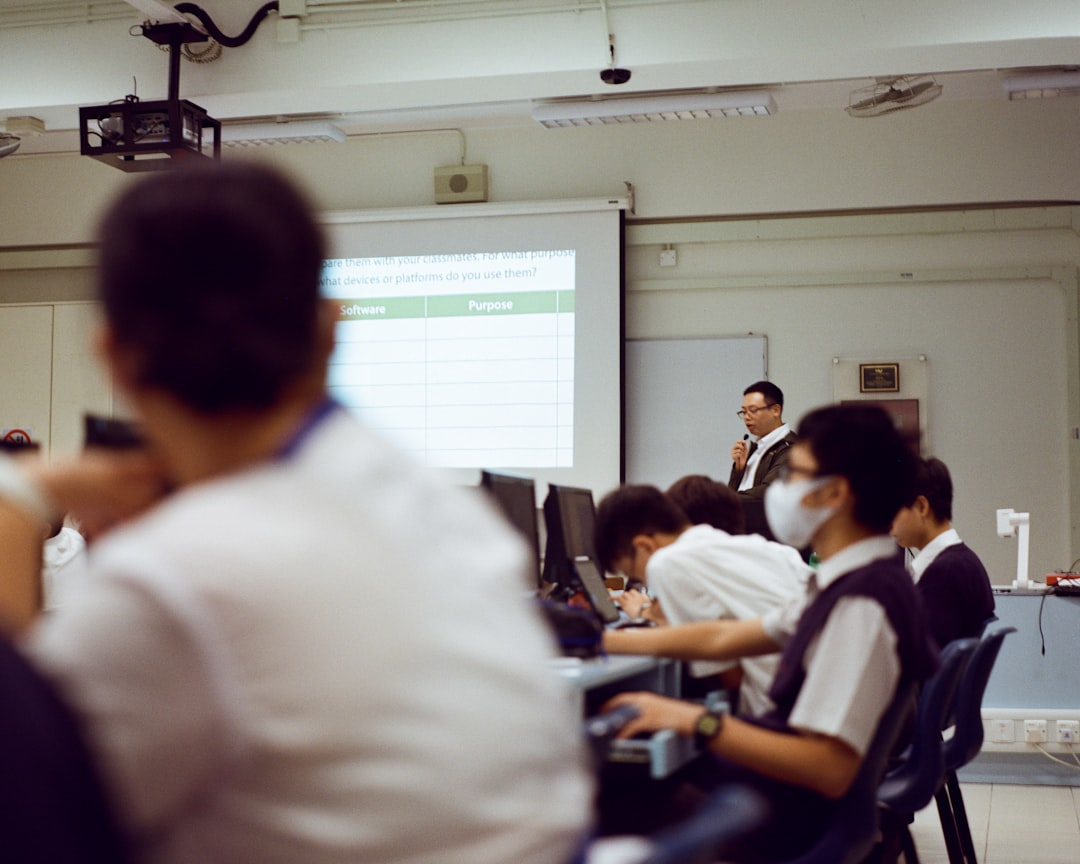
The statistics are staggering: 76% of teachers are seriously considering leaving their profession, and 84% report feeling overwhelmed by their workload. The teacher burnout epidemic isn't just a problem—it's a full-blown crisis that threatens the foundation of our education system. But what if technology could help solve this decades-old challenge?
Recent data shows that AI-powered classroom tools are giving educators back 15-20 hours per week by automating routine tasks and streamlining workflows. This isn't just about efficiency; it's about survival. As we face the largest teacher shortage in modern history, AI emerges not as a replacement for human educators, but as their most powerful ally.
The Scope of Teacher Burnout: Beyond the Headlines
The Numbers Don't Lie
The 2023 State of Teaching report reveals alarming trends:
- Average teacher workweek: 54 hours (14 hours above standard full-time)
- Unpaid overtime: Teachers work an average of 7 hours of unpaid overtime weekly
- Administrative burden: 41% of teachers' time is spent on non-instructional activities
- Retention crisis: Only 10% of teachers feel their workload is manageable
The Hidden Costs of Educator Workload
Teacher burnout extends far beyond individual exhaustion. The ripple effects include:
For Students:
- Decreased learning outcomes due to teacher turnover
- Larger class sizes as positions remain unfilled
- Reduced individualized attention and feedback
For Schools:
- Recruitment and training costs averaging $18,000 per teacher replacement
- Institutional knowledge loss
- Declining school culture and morale
For Society:
- Long-term educational achievement gaps
- Economic impact of underprepared workforce
- Perpetuation of educational inequities
The Root Causes: Where Teachers Lose Their Time
Grading and Assessment: The 20-Hour Weekly Black Hole
Traditional grading practices consume an average of 20 hours per week for full-time teachers. Consider a middle school English teacher with 150 students:
- Essay grading: 15 minutes per essay × 150 students = 37.5 hours for one assignment
- Weekly quizzes: 3 minutes per quiz × 150 students = 7.5 hours weekly
- Homework review: 2 minutes per assignment × 150 students × 5 days = 25 hours weekly
This workload is mathematically unsustainable within regular school hours.
Administrative Tasks: Death by a Thousand Forms
Teachers spend 13 hours weekly on administrative tasks:
- Data entry and progress reporting (4 hours)
- Meeting preparation and attendance (3.5 hours)
- Communication with parents and administrators (2.5 hours)
- Compliance documentation (3 hours)
Lesson Planning and Material Creation: The Endless Cycle
Effective lesson planning requires:
- Content research: 2-3 hours per lesson
- Activity development: 1-2 hours per lesson
- Assessment creation: 1 hour per assessment
- Differentiation planning: Additional 30 minutes per lesson for diverse learners
For teachers managing multiple subjects or grade levels, this multiplies exponentially.
The AI Revolution in Education: More Than Just Buzzwords
Defining AI-Powered Classroom Tools
AI-powered classroom tools leverage artificial intelligence to automate, enhance, or streamline educational processes. These tools include:
- Automated grading systems that provide instant feedback on assignments
- Content generation platforms that create lesson materials and assessments
- Intelligent tutoring systems that provide personalized student support
- Predictive analytics tools that identify at-risk students early
- Administrative automation that handles routine paperwork and reporting
The Technology Behind the Time Savings
Natural Language Processing (NLP): Enables AI to understand and evaluate written responses, providing detailed feedback on essays, short answers, and complex problem-solving.
Machine Learning Algorithms: Adapt to individual teacher preferences and student needs, becoming more effective over time.
Predictive Analytics: Identify patterns in student performance to prevent problems before they occur.
Computer Vision: Automate grading of handwritten work and mathematical equations.
Real-World Time Savings: Where the Hours Come Back
Automated Grading: From 20 Hours to 2 Hours Weekly
Traditional Approach:
- Manual grading of 150 student assignments: 15 hours
- Feedback writing: 3 hours
- Grade book entry: 2 hours
- Total: 20 hours
AI-Powered Approach:
- AI grading with teacher review: 1 hour
- Customizing feedback templates: 30 minutes
- Quality assurance spot-checks: 30 minutes
- Total: 2 hours
Time Saved: 18 hours weekly
Assessment Creation: From 8 Hours to 1 Hour
Tools like Evelyn Learning's AI Practice Test Generator demonstrate remarkable efficiency gains:
Traditional Method:
- Research appropriate questions: 3 hours
- Write original questions: 4 hours
- Create answer keys and explanations: 1 hour
- Total: 8 hours
AI-Powered Method:
- Input standards and difficulty requirements: 15 minutes
- Review and customize generated questions: 30 minutes
- Final quality check: 15 minutes
- Total: 1 hour
Time Saved: 7 hours per assessment
Administrative Automation: Reclaiming 10 Hours Weekly
Automated Progress Reports:
- Traditional: 4 hours of manual data compilation
- AI-powered: 30 minutes of review and customization
- Savings: 3.5 hours
Parent Communication:
- Traditional: Individual email composition and scheduling
- AI-powered: Automated updates with personalized messaging
- Savings: 2.5 hours
Attendance and Behavior Tracking:
- Traditional: Manual entry and pattern analysis
- AI-powered: Automated tracking with alert systems
- Savings: 2 hours
Meeting Preparation:
- Traditional: Manual data gathering and presentation creation
- AI-powered: Automated report generation with key insights
- Savings: 2 hours
Case Studies: Teachers Transforming Their Practice
Case Study 1: Sarah Chen, High School Mathematics Teacher
Challenge: Sarah taught five sections of Algebra II with 32 students each (160 total). She was spending 25 hours weekly on grading and struggled to provide meaningful feedback.
AI Solution Implemented:
- Automated problem-solving assessment platform
- AI-powered homework checking system
- Intelligent tutoring recommendations
Results:
- Grading time reduced from 25 to 4 hours weekly
- Student engagement increased 34% due to immediate feedback
- Achievement scores improved 18% with personalized practice recommendations
- Sarah's job satisfaction rating: 4.2/5 (up from 2.1/5)
Case Study 2: Marcus Rodriguez, Middle School English Teacher
Challenge: Marcus managed 180 students across six classes, spending 22 hours weekly grading essays and providing writing feedback.
AI Solution Implemented:
- AI essay scoring with detailed feedback
- Automated grammar and style checking
- Personalized writing improvement recommendations
Results:
- Grading time reduced from 22 to 3 hours weekly
- Student writing scores improved 26% with consistent, detailed feedback
- Revision rates increased 89% due to actionable suggestions
- Marcus now spends reclaimed time on creative lesson planning
Case Study 3: Jennifer Park, Elementary School Multi-Subject Teacher
Challenge: Jennifer taught all subjects to 28 fourth-graders, creating assessments for math, science, reading, and social studies weekly.
AI Solution Implemented:
- Multi-subject assessment generator
- Automated reading comprehension scoring
- Differentiated instruction recommendations
Results:
- Assessment creation time reduced from 12 to 2 hours weekly
- Differentiation planning streamlined by 8 hours weekly
- Student achievement gaps narrowed by 23%
- Parent satisfaction increased due to more frequent, detailed progress updates
Implementation Strategies: Making AI Work for Your Classroom
Phase 1: Assessment and Planning (Weeks 1-2)
Audit Current Time Usage:
- Track time spent on different activities for one week
- Identify the three most time-consuming tasks
- Calculate hourly cost of current methods
Set Clear Objectives:
- Define specific time-saving goals
- Identify quality benchmarks that must be maintained
- Establish student outcome metrics to monitor
Phase 2: Tool Selection and Setup (Weeks 3-4)
Choose the Right AI Tools:
- Start with high-impact, low-complexity solutions
- Ensure integration with existing systems
- Verify data privacy and security compliance
Recommended Starting Points:
- Automated grading for objective assessments
- Assignment generation for practice materials
- Progress reporting automation
Phase 3: Gradual Implementation (Weeks 5-8)
Start Small:
- Implement one tool at a time
- Begin with low-stakes assignments
- Maintain backup manual processes initially
Monitor and Adjust:
- Compare AI output quality to manual work
- Gather student feedback on AI-generated materials
- Track actual time savings weekly
Phase 4: Scale and Optimize (Weeks 9-12)
Expand Usage:
- Add more complex assignments to AI workflow
- Integrate multiple tools for compound time savings
- Share successful practices with colleagues
Optimize Workflows:
- Customize AI settings based on experience
- Create templates for common tasks
- Develop quality assurance checklists
Addressing Common Concerns: The Realities of AI in Education
"AI Will Replace Teachers"
Reality: AI amplifies teacher effectiveness rather than replacing human educators. The irreplaceable elements of teaching include:
- Emotional intelligence and empathy
- Creative problem-solving and adaptability
- Complex relationship building
- Moral and ethical guidance
- Inspiration and motivation
AI handles routine tasks, freeing teachers for these uniquely human responsibilities.
"AI-Generated Content Lacks Quality"
Reality: Modern AI tools produce content that often exceeds the quality of rushed, manually-created materials. Key quality indicators:
- Consistency: AI maintains uniform standards across all materials
- Alignment: Perfect correlation with learning standards and objectives
- Personalization: Adaptive content matching individual student needs
- Error Reduction: Elimination of human transcription and calculation errors
"Students Will Become Too Dependent on AI"
Reality: Properly implemented AI tools enhance learning rather than creating dependency. Benefits include:
- Immediate feedback accelerates learning cycles
- Personalized practice addresses individual weaknesses
- Consistent availability provides support outside classroom hours
- Detailed explanations help students understand reasoning processes
The Future of AI-Powered Teaching: What's Coming Next
Emerging Technologies on the Horizon
Predictive Learning Analytics:
- Early identification of learning difficulties
- Proactive intervention recommendations
- Career and academic pathway guidance
Advanced Natural Language Processing:
- Real-time conversation analysis for language learning
- Sophisticated writing coaching and mentorship
- Cross-cultural communication support
Immersive AI Tutoring:
- Virtual reality classroom experiences
- AI-powered simulation environments
- Adaptive storytelling for engagement
Preparing for the Next Wave
Professional Development Priorities:
- AI literacy: Understanding capabilities and limitations
- Data interpretation: Making decisions from AI insights
- Human-AI collaboration: Optimizing the partnership
- Ethical AI use: Maintaining fairness and transparency
Measuring Success: KPIs for AI Implementation
Time-Based Metrics
- Weekly hours saved on routine tasks
- Turnaround time for assignment feedback
- Preparation time for lessons and assessments
Quality Metrics
- Student achievement scores and growth
- Engagement levels and participation rates
- Feedback quality and specificity
Satisfaction Indicators
- Teacher job satisfaction surveys
- Student feedback on learning experience
- Parent satisfaction with communication and progress
Return on Investment
- Cost per hour saved compared to teacher salary
- Student outcome improvements relative to investment
- Teacher retention and recruitment benefits
Taking Action: Your Roadmap to Reclaiming Time
Week 1: Baseline Assessment
- Document current time allocation across all teaching tasks
- Identify the three most time-consuming activities
- Calculate the hourly cost of these activities
Week 2: Research and Selection
- Investigate AI tools addressing your biggest time drains
- Request demonstrations from leading platforms
- Compare features, pricing, and integration capabilities
Week 3: Pilot Implementation
- Start with one high-impact, low-risk tool
- Begin with a small subset of assignments or students
- Document initial results and challenges
Week 4: Evaluation and Expansion
- Measure time savings and quality outcomes
- Gather student and colleague feedback
- Plan expansion to additional tools or applications
Frequently Asked Questions
Q: How long does it take to see meaningful time savings from AI tools? A: Most teachers report noticeable time savings within 2-3 weeks of implementation. Significant savings (10+ hours weekly) typically occur after 4-6 weeks as workflows are optimized.
Q: What's the typical cost of AI-powered classroom tools? A: Costs vary widely, from $50-500 monthly per teacher depending on features and scale. Most tools pay for themselves within 2-3 months through time savings alone.
Q: How do I ensure AI-generated content meets my quality standards? A: Implement a systematic review process: start with low-stakes content, develop quality checklists, and maintain sample manual comparisons. Most platforms allow extensive customization to match your standards.
Q: What about data privacy and student information security? A: Choose tools that comply with FERPA, COPPA, and other relevant regulations. Verify data encryption, storage policies, and access controls before implementation.
Q: How do I convince my administration to support AI tool adoption? A: Present a clear business case including time savings calculations, potential student outcome improvements, and teacher retention benefits. Start with pilot programs to demonstrate value.
Conclusion: The Time to Act is Now
The teacher burnout epidemic demands immediate, innovative solutions. AI-powered classroom tools offer unprecedented opportunity to restore balance to educators' lives while improving student outcomes. The teachers who are already implementing these solutions aren't just saving time—they're reclaiming their passion for teaching.
The question isn't whether AI will transform education; it's whether you'll lead that transformation or watch from the sidelines. With tools like Evelyn Learning's AI Practice Test Generator already helping educators save 15+ hours weekly on assessment creation alone, the future of efficient, effective teaching is available today.
Every week you delay implementation is another week of 54-hour workdays, another week of rushed feedback, another step closer to burnout. The technology exists, the results are proven, and your students—and your sanity—deserve better.
The time to reclaim your time is now. The question is: what will you do with those 15 hours when you get them back?